
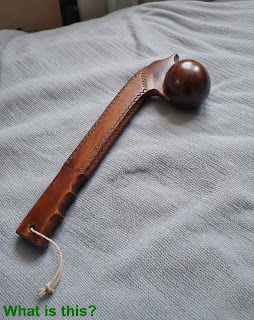
Have you ever discovered a strange object with a friend and wondered what it could possibly be? Maybe you found a small metal piece in the garden, an unusual plastic device in an old drawer, a strange tool at a flea market, or an unfamiliar item while exploring outdoors.
At first glance, the object might look completely ordinary—or so unusual that you cannot imagine what it was designed to do. The good news is that identifying mysterious objects often becomes much easier when you know what details to look for and where to find reliable information.
Before guessing, throwing it away, or trying to take it apart, follow these practical steps to uncover its possible purpose.
1. Examine the Object Carefully
The first step is to observe the object without making assumptions. Small details can provide important clues about its original function.
Look closely at its:
- Shape: Is it round, flat, curved, pointed, hollow, or cylindrical?
- Material: Does it appear to be made of metal, wood, glass, rubber, or plastic?
- Size: Is it small enough to fit in a pocket, or does it look like part of a larger machine?
- Weight: Does it feel unusually heavy or lightweight for its size?
- Surface: Are there signs of rust, wear, scratches, corrosion, or old paint?
- Moving parts: Does it have hinges, springs, buttons, gears, screws, or a rotating section?
For example, a small metal object with a spring and a moving lever might be part of a tool or mechanical device. A plastic piece with electrical contacts could belong to an electronic product.
These details do not prove what the object is, but they help narrow down the possibilities.
2. Look for Numbers, Logos, and Other Markings
Many objects contain clues that are easy to overlook. Turn the item over only if it is safe to handle, and check for stamped letters, engraved numbers, manufacturer names, symbols, or model codes.
These markings can sometimes reveal the brand, product type, manufacturing period, or intended use.
Try searching any visible text online. If you find a code, enter it exactly as it appears, including letters, numbers, and hyphens.
For example, searching a manufacturer name alongside a model number may lead you to a product manual, replacement-parts listing, or photograph of the same item.
Keep in mind that markings can be worn away, misleading, or unrelated to the object’s original purpose. Use them alongside its physical features rather than relying on them alone.
3. Take Clear Photographs From Different Angles
A good photograph can make identification much easier, especially when the object has an unusual shape.
If you and your friend want to identify the item together, take several pictures:
- A clear photo of the entire object.
- A close-up of any markings or labels.
- A picture of the front, back, and sides.
- A photograph showing any holes, openings, joints, or moving parts.
- A picture beside a familiar object, such as a ruler, to show its size.
Use natural lighting and a simple background. Avoid placing the item too close to the camera if that makes its proportions look distorted.
If possible, photograph the object in its original location before moving it. Its surroundings may provide useful clues about where it came from.
4. Use Reverse Image Search and Visual Identification Tools
If the object has no readable markings, visual search can be a useful next step.
You can upload a clear photograph to a visual search service or use a reverse-image search tool to look for similar objects online. You may discover an identical product, a similar component, or a photograph from a repair guide.
Artificial intelligence tools can also suggest possible identities based on an image and a description. However, their suggestions should be treated as possibilities rather than confirmed answers.
For better results, describe the item’s visible features. Instead of asking only, “What is this?”, try a more specific question:
“What is this small metal object with a curved handle, a circular opening, and a spring-loaded lever? It is approximately five centimeters long.”
Compare the suggestions with photographs from reliable sources, product manuals, museum collections, or specialist websites before deciding what the object is.
5. Think About Where You Found It
The location can be just as informative as the object’s appearance.
Ask yourself and your friend a few questions:
- Was it found inside a house, in a garden, near a road, or in a wooded area?
- Was it close to a machine, a fence, a vehicle, or a building?
- Were there other similar objects nearby?
- Did it appear old, recently manufactured, or damaged?
- Could it have fallen from something or been left behind during repairs?
An unfamiliar metal component found near a workshop may be a machine part. A small plastic piece discovered near an irrigation system might belong to a connector or fitting.
However, location alone is not enough to identify an item. Objects can be moved, discarded, or carried from somewhere else.
6. Compare It With Common Everyday Objects
Sometimes an item looks mysterious simply because it is an older version of something familiar.
Older household tools, sewing accessories, kitchen gadgets, mechanical fasteners, and electronic components can have unfamiliar designs. A small toothed metal piece, for example, might be part of a cutting tool, a fastening mechanism, or a device that no longer exists in its original form.
Try comparing the object with:
- Household tools and hardware.
- Kitchen utensils and accessories.
- Bicycle or vehicle components.
- Sewing and craft equipment.
- Plumbing and irrigation fittings.
- Electrical and electronic parts.
- Vintage household products.
Search for the general category first, then refine your search using its distinctive shape, material, and measurements.
Avoid forcing a match. Two objects may look similar but have completely different functions.
7. Ask Someone With Relevant Expertise
If online searches do not provide a convincing answer, consider asking a person who works with similar objects.
Depending on what you found, useful people might include:
- A mechanic for vehicle or machinery components.
- An electrician for ordinary, safely handled electrical accessories.
- A plumber for pipes, valves, and fittings.
- An antique dealer for vintage household items.
- A museum curator or local historian for historical objects.
- A specialist in geology or natural history for unusual rocks, fossils, or natural specimens.
Share clear photographs, measurements, any markings, and the location where the object was discovered. These details will help the expert assess it more accurately.
If the object may be dangerous, do not transport it to a shop or expert. Contact the appropriate local authorities or emergency service for advice.
8. Know When Not to Touch the Object
Curiosity is natural, but safety comes first. Some unidentified objects can pose risks even when they appear harmless.
Do not touch, open, dismantle, smell, heat, or test an object if it resembles:
- Ammunition, a grenade, or another explosive device.
- An unfamiliar chemical container or leaking substance.
- A damaged battery that is swollen, leaking, or unusually hot.
- An electrical component connected to a power source.
- A medical needle or other potentially contaminated sharp object.
- A device with suspicious wires, a timer, or other potentially hazardous features.
If you suspect an explosive or other dangerous device, move away, keep others away, and contact local emergency services or police. Do not attempt to move it or take close-up photographs.
If you discover a potentially archaeological object, follow local laws and contact the relevant heritage authority rather than cleaning or altering it. In many places, rules govern how historical objects and artifacts may be collected or removed.
9. Work With Your Friend to Solve the Mystery
Identifying an object can become a fun investigation when two people compare their observations.
One person can examine the object’s shape and material while the other searches for markings or similar images. Write down the possible explanations, then compare each one against the evidence.
Ask three important questions:
- Does the suggested identification match the object’s actual shape and construction?
- Is there a reliable source showing the same object or explaining its function?
- Can the proposed use be confirmed without putting anyone at risk?
If several explanations seem plausible, keep more than one possibility open until you find stronger evidence.
The goal is not to produce the quickest guess. It is to find the explanation best supported by the available clues.
What If You Still Cannot Identify It?
Not every object can be identified from a short description. Some items are incomplete, custom-made, very old, or designed for specialized equipment.
If you want help narrowing down the possibilities, collect the following information:
- Appearance: Describe the shape, color, and material.
- Dimensions: Estimate its length, width, and thickness.
- Markings: Record every visible number, letter, or symbol.
- Location: Explain where you found it.
- Condition: Mention rust, damage, moving parts, or missing pieces.
- Photographs: Include clear images from multiple angles, provided the object is safe to photograph.
With these details, someone may be able to identify the item—or at least narrow the search to a few realistic possibilities.
Final Thoughts
Finding a mysterious object with a friend can turn an ordinary day into an interesting puzzle. The key to solving it is to observe carefully, look for markings, use photographs and visual search, investigate the discovery location, and verify possible answers with trustworthy sources.
Most importantly, never assume an unfamiliar object is harmless simply because it looks small or ordinary. If there is any reason to suspect danger, leave it alone and seek appropriate assistance.
Have you and a friend discovered an object you cannot identify? Describe its size, material, markings, and where you found it, or share clear photographs if it is safe to do so. Those clues may be the first step toward solving the mystery.