

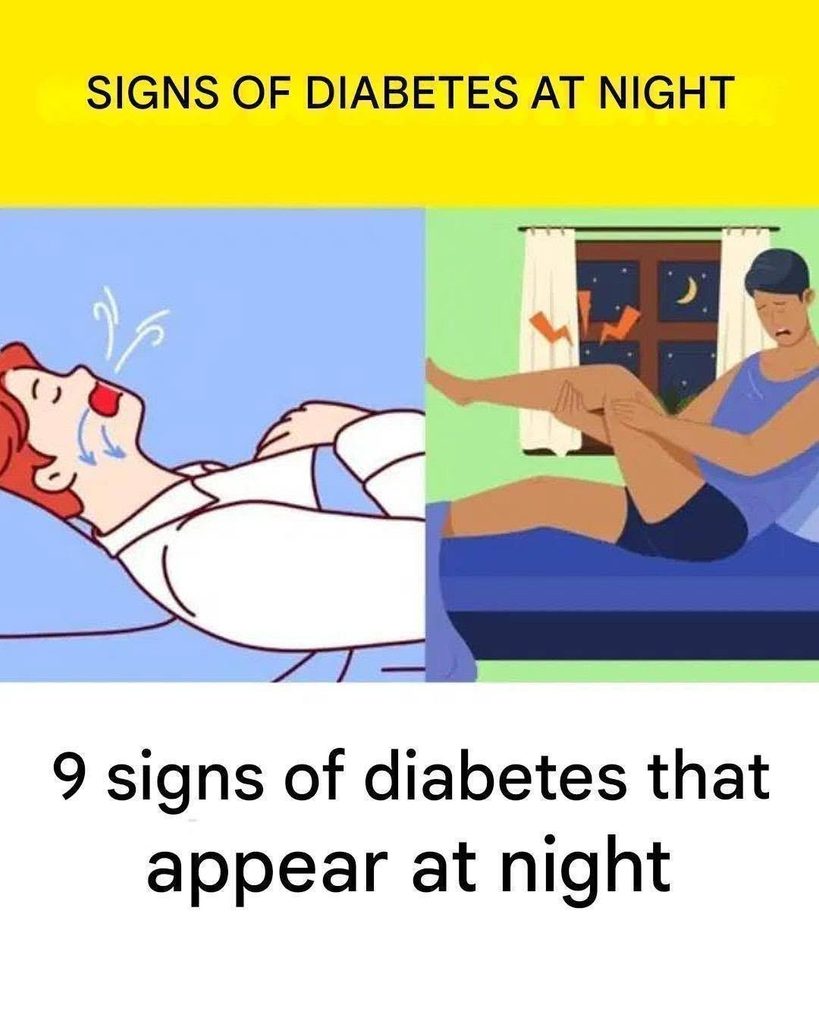
Have you ever found yourself waking up several times during the night to use the bathroom, feeling extremely thirsty, or noticing tingling in your feet when you’re trying to sleep? While these symptoms can have many different causes, some of them may be early warning signs of diabetes.
Type 2 diabetes often develops gradually, and some symptoms become more noticeable at night. The good news is that recognizing these signs early can help you seek testing and treatment before serious complications develop.
Here are nine nighttime symptoms that deserve attention.
1. Waking Up Frequently to Urinate
One of the most common early signs of diabetes is waking up several times during the night to urinate, a symptom known as nocturia.
When blood sugar becomes too high, your kidneys work harder to remove the excess glucose through urine, which can increase nighttime bathroom trips. <Cite refs={[“turn482059search0″,”turn482059search6”]}/>
However, nocturia can also happen because of aging, drinking fluids before bed, urinary tract problems, or an enlarged prostate.
2. Excessive Thirst During the Night
Do you wake up feeling like your mouth is completely dry?
Frequent urination can cause fluid loss, leading to intense thirst that may wake you from sleep. This combination—frequent nighttime urination plus excessive thirst—is a classic warning sign of high blood sugar. <Cite refs={[“turn482059search1″,”turn482059search0”]}/>
3. Night Sweats
Waking up with soaked pajamas or damp sheets can sometimes happen because of low blood sugar during sleep, especially in people taking insulin or certain diabetes medications. <Cite refs={[“turn482059search3″,”turn482059search10”]}/>
Night sweats can also have many other causes, including infections, menopause, anxiety, or certain medications.
4. Restless or Interrupted Sleep
High or low blood sugar can interfere with restful sleep.
Thirst, repeated bathroom trips, and nighttime discomfort may make it difficult to stay asleep, leaving you feeling exhausted the next morning. <Cite refs={[“turn482059search3″,”turn482059search1”]}/>
5. Morning Headaches
Some people with nighttime blood sugar fluctuations wake up with headaches.
While headaches have many possible causes, they can sometimes be related to disrupted sleep or overnight changes in blood glucose. <Cite refs={[“turn482059search3″,”turn482059search1”]}/>
6. Tingling or Burning Feet at Night
A tingling, burning, or numb sensation in your feet that becomes more noticeable when you’re lying in bed may be an early sign of diabetic peripheral neuropathy, a type of nerve damage associated with diabetes. <Cite refs={[“turn482059search0″,”turn482059search4”]}/>
Persistent numbness or burning should be evaluated by a healthcare professional.
7. Leg Cramps While Sleeping
Painful leg cramps during the night can have many causes, including muscle fatigue, dehydration, or certain medications.
In some people with diabetes, nerve or circulation problems may contribute to nighttime leg discomfort. <Cite refs={[“turn482059search4″,”turn482059search3”]}/>
8. Itchy or Dry Skin
High blood sugar can contribute to dehydration, which may leave your skin feeling unusually dry or itchy.
Repeated yeast infections or persistent itching, particularly around the genital area, can also occur in some people with diabetes. <Cite refs={[“turn482059search0″,”turn482059search2”]}/>
9. Blurred Vision When You Wake Up
Fluctuating blood sugar levels can temporarily affect the eye’s ability to focus.
If you notice blurry vision when waking up or at other times, it’s important not to ignore it, especially if it happens repeatedly. <Cite refs={[“turn482059search1″,”turn482059search0”]}/>
When Should You Get Tested?
Having one of these symptoms doesn’t necessarily mean you have diabetes. However, if you experience several of them—especially frequent nighttime urination, excessive thirst, fatigue, or unexplained weight loss—you should arrange a medical evaluation.
A healthcare professional may recommend tests such as:
- HbA1c: Measures your average blood sugar over the past two to three months.
- Fasting blood glucose: Measures blood sugar after fasting.
- Random blood glucose: May be used when symptoms are significant. <Cite refs={[“turn482059search1″,”turn482059search0”]}/>
Emergency Warning Signs
Seek immediate medical care if you develop:
- Extreme thirst with frequent urination and vomiting.
- Fruity-smelling breath.
- Confusion or unusual drowsiness.
- Rapid or difficult breathing.
- Severe weakness or inability to stay awake. <Cite ref=turn482059search10/>
Final Thoughts
Nighttime symptoms can sometimes provide important clues about your health. Waking repeatedly to urinate, excessive thirst, tingling feet, restless sleep, and blurred vision are all symptoms worth paying attention to—but they are not enough to diagnose diabetes on their own.
The only way to confirm diabetes is through appropriate blood tests. If these symptoms become frequent or appear together, don’t ignore them. Early diagnosis and treatment can help protect your eyes, nerves, kidneys, and heart for years to come.
Medical Disclaimer: This article is for educational purposes only and does not replace professional medical advice, diagnosis, or treatment. If you’re concerned about diabetes symptoms, consult a qualified healthcare professional.