
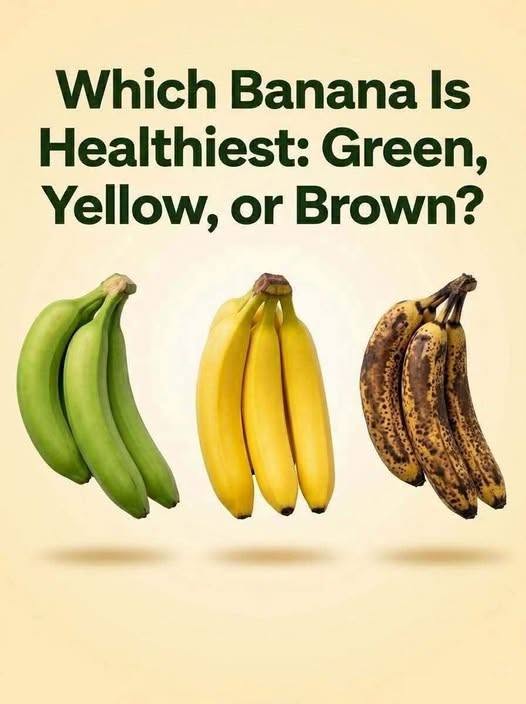
Have you ever stood in front of a bunch of bananas and wondered whether you should choose the green ones, the bright yellow ones, or those covered in brown spots?
Bananas change in taste, texture, and nutritional composition as they ripen. Green bananas tend to be firmer and contain more resistant starch, while ripe yellow bananas are sweeter and generally have more readily available sugars. Brown-spotted bananas are often softer and sweeter still.
But does one stage of ripeness make a banana healthier than all the others?
The truth is that all three can be nutritious. The best choice depends on your dietary needs, taste preferences, and how your body responds to different foods.
1. Green Bananas: A Good Source of Resistant Starch
Green bananas are harvested before they have fully ripened. They contain more resistant starch, a type of carbohydrate that resists digestion in the small intestine and can be fermented by gut bacteria in the large intestine.
This makes green bananas an interesting option for people looking to increase their intake of certain types of dietary fiber.
Potential benefits include:
- Supporting gut health: Resistant starch can be fermented by beneficial gut bacteria.
- Promoting fullness: Less-ripe bananas may help some people feel satisfied for longer.
- Providing slower-digested carbohydrates: Resistant starch is not digested in the same way as ordinary starch.
However, green bananas can cause gas, bloating, or discomfort in some people, especially when eaten in large quantities. Their firm texture and less-sweet flavor may also make them less appealing.
2. Yellow Bananas: A Balanced Everyday Choice
Yellow bananas are fully ripe or close to fully ripe. As they ripen, some of their starch converts into sugars, making them sweeter and softer.
They still provide valuable nutrients, including potassium, vitamin B6, and vitamin C.
Yellow bananas are a convenient option for breakfast, snacks, smoothies, or a pre-exercise meal.
Their advantages include:
- A naturally sweet flavor.
- A softer texture that is easy to chew.
- Carbohydrates that provide readily available energy.
- Useful amounts of potassium and vitamin B6.
For many people, a ripe yellow banana is an excellent everyday fruit. It offers a balance of taste, convenience, and nutrition without requiring you to choose a particular ripeness stage.
3. Brown-Spotted Bananas: Sweeter and Softer
As bananas continue to ripen, brown spots often appear on the peel. The fruit usually becomes softer and sweeter as more starch is converted into sugars.
Brown-spotted bananas can be especially useful in recipes such as banana bread, oatmeal, pancakes, and smoothies.
They still provide nutrients, although vitamin C levels can change during ripening and storage. The exact nutritional differences depend on the banana variety and its ripeness.
Keep in mind that brown spots on the peel are not the same as mold or spoilage. A banana with a few brown spots may b