

Your feet do more than carry you from place to place. They contain nerves, blood vessels, muscles, joints, and soft tissues that help you stand, walk, and maintain balance. Sometimes, changes in your feet can offer clues about your overall health.
Persistent tingling, unusual swelling, slow-healing sores, or changes in skin color may be linked to conditions that deserve medical attention. In some cases, these symptoms can occur in people with diabetes, circulation problems, or nerve disorders.
However, a symptom in your feet does not automatically mean you have a serious illness. The important thing is to recognize changes that are new, persistent, worsening, or accompanied by other symptoms.
Here are nine foot symptoms you should not ignore.
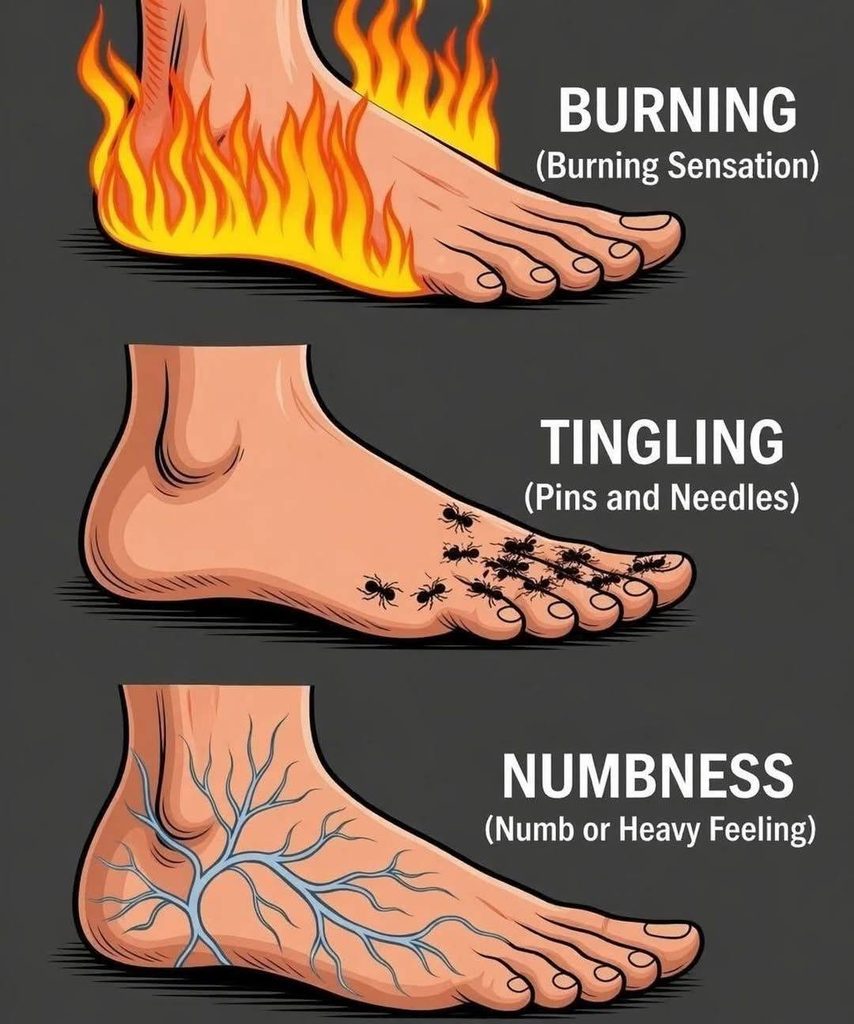
1. Tingling or a Pins-and-Needles Sensation
Do your feet sometimes feel as though tiny needles are pricking your skin? Occasional tingling can happen after sitting in an awkward position, but frequent or persistent tingling deserves attention.
Possible causes include:
- Peripheral neuropathy, which affects the nerves outside the brain and spinal cord.
- Diabetes or prolonged high blood sugar.
- Vitamin B12 deficiency.
- Nerve compression or certain medications.
Diabetes-related nerve damage often begins in the feet and may cause tingling, burning, numbness, or reduced sensation.
What to do: If tingling keeps returning or affects both feet, arrange a medical assessment. Early evaluation can help identify the cause and reduce the risk of complications.
2. Burning Pain in Your Feet
A burning sensation in the soles or toes can make walking or sleeping uncomfortable. Some people notice it most strongly at night.
Burning feet can be associated with nerve problems, diabetes, certain nutritional deficiencies, alcohol-related nerve damage, or other medical conditions. Skin irritation and some foot infections can also cause burning sensations.
Pay attention to whether the burning is accompanied by numbness, weakness, redness, or swelling.
What to do: Seek medical advice if the sensation persists, worsens, or interferes with everyday activities. Sudden severe pain or burning accompanied by a cold, pale, or blue foot requires urgent medical attention.
3. Swollen Feet or Ankles
Swelling can occur after standing for a long time, sitting for extended periods, or spending time in hot weather. Mild swelling may improve with rest and leg elevation.
However, persistent swelling can sometimes be associated with problems involving the veins, heart, kidneys, liver, or certain medications.
Possible warning signs include swelling that repeatedly returns, tight skin, discomfort, or swelling that gradually worsens.
What to do: Arrange a medical assessment for unexplained or persistent swelling.
Important: Sudden swelling in one leg, particularly with pain, warmth, or redness, needs urgent medical evaluation because it may indicate a blood clot. If swelling occurs with chest pain or difficulty breathing, seek emergency care.
4. Feet That Feel Unusually Cold
Cold feet are common in cold weather and do not necessarily indicate illness. However, feet that remain unusually cold despite a warm environment may warrant attention, particularly when accompanied by other changes.
Possible explanations include circulation problems, an underactive thyroid, anemia, or nerve-related conditions.
Peripheral artery disease, for example, occurs when narrowed arteries reduce blood flow to the limbs. It may cause one foot to feel colder than the other, pain while walking, or changes in skin color.
What to do: Speak with a healthcare professional if your feet remain unusually cold or you notice changes in circulation.
A foot that suddenly becomes cold, pale or blue, painful, or numb is a medical emergency.
5. Numbness or Loss of Feeling
Numbness means you cannot feel touch, temperature, or pain normally. This can be especially concerning because you might not notice a blister, cut, burn, or wound.
Diabetes-related neuropathy is one possible cause, but nerve compression, spinal problems, vitamin deficiencies, and other disorders can also lead to numbness.
People with reduced sensation may develop foot injuries without realizing it, increasing the risk of infection.
What to do: Have persistent numbness evaluated. If you have diabetes or reduced sensation, inspect your feet daily for cuts, blisters, redness, or sores.
Sudden numbness accompanied by weakness, difficulty walking, or other neurological symptoms requires emergency assessment.
6. Wounds That Heal Slowly
A small blister or cut should generally begin healing over time. If a wound on your foot remains open, repeatedly breaks down, or shows little improvement, it may indicate an underlying problem.
Possible causes include:
- Reduced blood circulation.
- Diabetes and nerve damage.
- Repeated pressure or friction.
- Infection or other conditions affecting healing.
Foot ulcers are particularly important to recognize in people with diabetes because reduced sensation can hide injuries and poor circulation can interfere with healing.
What to do: Seek prompt medical care for a foot wound that is not healing, especially if you have diabetes, poor circulation, or reduced sensation. Do not wait for a wound to become painful before getting it checked.
Increasing redness, warmth, swelling, pus, fever, or rapidly worsening skin changes may indicate infection and require urgent care.
7. Changes in Skin Color or Texture
Changes in the appearance of your feet can have several explanations.
For example:
- Redness and warmth may occur with inflammation or infection.
- Pale or bluish skin can sometimes indicate reduced blood flow.
- Thickened or scaly skin may be associated with pressure, eczema, or fungal infection.
- Darkened patches can have several causes, including changes in circulation or skin conditions.
The location, duration, and associated symptoms all matter. Skin changes alone cannot reliably identify a particular disease.
What to do: Seek medical advice for persistent or unexplained changes, particularly if they occur alongside pain, swelling, wounds, or altered sensation.
Sudden blue or pale discoloration accompanied by pain or coldness needs emergency assessment.
8. Persistent Foot Pain or Pain While Walking
Foot pain can result from everyday problems such as wearing poorly fitting shoes, overuse, plantar fasciitis, arthritis, or an injury.
However, pain that repeatedly develops while walking and improves with rest can sometimes be a sign of peripheral artery disease, especially when it affects the calves or feet and occurs alongside circulation changes.
Pain that persists at rest, becomes severe, or prevents normal walking should not be ignored.
What to do: Arrange an examination if the pain continues, keeps returning, or has no clear explanation. A healthcare professional can help distinguish common mechanical problems from nerve, joint, or circulation disorders.
Sudden severe pain, especially with swelling, discoloration, or a cold foot, requires urgent medical attention.
9. Thickened, Brittle, or Discolored Toenails
Toenails that become thick, yellowish, brittle, or crumbly may be affected by a fungal infection. Nail changes can also occur because of repeated pressure from shoes, injuries, aging, or certain skin conditions.
Although nail fungus is common, it is not usually a reliable sign of diabetes or another systemic disease by itself.
People with diabetes or poor circulation should be especially careful with nail care because small injuries can develop into more serious wounds.
What to do: Consult a healthcare professional if nail changes persist, spread, cause pain, or are accompanied by redness or swelling. Avoid cutting nails too deeply or attempting to remove damaged nails yourself.
What Do These Foot Symptoms Have in Common?
Several of these symptoms can occur in diabetes, particularly tingling, burning, numbness, and wounds that heal slowly. High blood sugar over time can damage nerves and blood vessels, making it harder to feel injuries and heal properly.
However, the same symptoms can also have other causes. A clinician may review your medical history, examine your feet, assess circulation and sensation, and recommend blood tests or other investigations when appropriate.
If you have risk factors for diabetes—such as a family history, excess weight, or a history of elevated blood sugar—ask your healthcare professional whether diabetes testing is appropriate.
How to Protect Your Feet Every Day
A few simple habits can help maintain foot health:
- Check your feet daily. Look for blisters, cuts, redness, swelling, and changes in skin color.
- Wear comfortable, well-fitting shoes. Avoid footwear that repeatedly rubs or compresses your toes.
- Keep your feet clean and dry. Dry carefully between your toes to help prevent some infections.
- Avoid walking barefoot in places where you could injure your feet. This is particularly important if you have reduced sensation.
- Manage long-term health conditions. Follow professional advice for diabetes, blood pressure, and circulation problems.
- Avoid treating persistent symptoms with home remedies alone. Delayed care can allow certain problems to worsen.
When Should You Seek Medical Help?
Arrange a medical appointment for persistent tingling, unexplained swelling, recurring foot pain, changes in sensation, or wounds that heal slowly.
Seek urgent care if you notice sudden severe pain, a suddenly cold or discolored foot, rapidly spreading redness, or a wound with signs of a serious infection. Chest pain or difficulty breathing alongside leg swelling requires emergency help.
Final Thoughts
Your feet can sometimes provide clues about your health, but no single foot symptom can diagnose diabetes, poor circulation, or another disease on its own.
Tingling, burning, numbness, swelling, skin changes, and slow-healing wounds deserve attention when they persist or appear unexpectedly. Recognizing these changes early can help you get the right assessment and treatment.
Do not panic over every ache or change in your feet—but do not ignore persistent symptoms, either. Pay attention to what is new, monitor any changes, and seek professional advice when something does not seem right.
Medical Disclaimer: This article is for educational purposes only and is not a substitute for professional medical advice, diagnosis, or treatment. Consult a qualified healthcare professional about symptoms that concern you.